15 September 1985
15 September 1985
With the growth of Japan as an economic power, the Institute establishes a “country desk” dedicated to Japanese law. The country-desk model had always embodied the Institute’s approach to covering foreign legal orders. The “desks” are staffed by experts in the law of the respective country, who can conduct research in the jurisdiction itself and who maintain contacts with local scholars, judges, and attorneys. Today the Institute’s foreign law capabilities are bundled together in Centres of Expertise. Each focuses on an area or region of particular significance to legal scholars. Study in these areas requires specialized knowledge of the respective laws, languages, and cultures.


Country desk fellows Hanno Merkt (United States), Harald Baum (Japan) and Oliver Remien (Netherlands) (from left to right).
Coinciding with the zenith of Japan’s economic ascent, the Institute establishes a country desk dedicated specifically to Japanese law. The desk’s later enlargement to a Centre of Expertise creates one of Europe’s most important points of contact for legal questions on Japanese civil, commercial, and economic law. Starting in 2006 the Institute publishes the Zeitschrift für Japanisches Recht / Journal of Japanese Law in cooperation with the German-Japanese Association of Jurists.


The German Journal of Chinese Law is published by the Deutsch-Chinesische Juristenvereinigung in collaboration with the Sino-German Institute for Legal Studies in Nanjing and, since 2015, our Max Planck Institute. This journal publishes reports and analyses of current legal developments in China as well as German translations of significant new Chinese legislation.
From its inception, the Institute maintains country desks that research, observe, and document selected laws and legal systems in terms of legislation, case law, and legal literature. Even during Rabel’s tenure as director, country desks were set up for the world beyond Europe’s borders, and not just for the Anglo-American sphere. An early occupant of one of these desks is Karl Bünger, who as an Institute fellow began researching the civil and commercial law of China in 1934. Under Zweigert, full-time positions were established for legal systems that required particular linguistic and technical expertise, such as those of China, the Balkan region, South America, and the USSR.
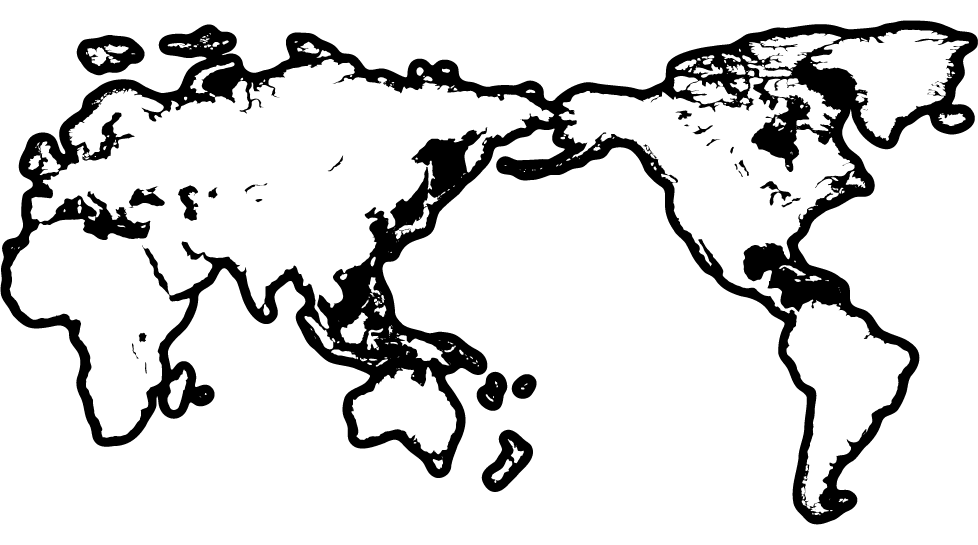
Today the Institute focuses on countries and regions whose study depends on special legal, linguistic, and cultural knowledge. The decision to create a Centre of Expertise for a particular country or region also takes geopolitical developments into account. Once limited to China, Japan, and Latin America, Centres now cover Turkey, Islamically influenced legal systems, Korea, and most recently, Africa.


With the end of the card catalogue system, a new era begins for the library in 1992. Computer technology makes its way into the library, and the connection to the Southwest German Library Network (SWB) allows users to search via an online public access catalogue. Library staff provide assistance to researchers in the reading room, as done here by Elke Halsen-Raffel at one of the new personal computers.